
The Living Eulogy Exercise: A Powerful Way to Figure Out What Actually Matters | Phoenix Life Coach
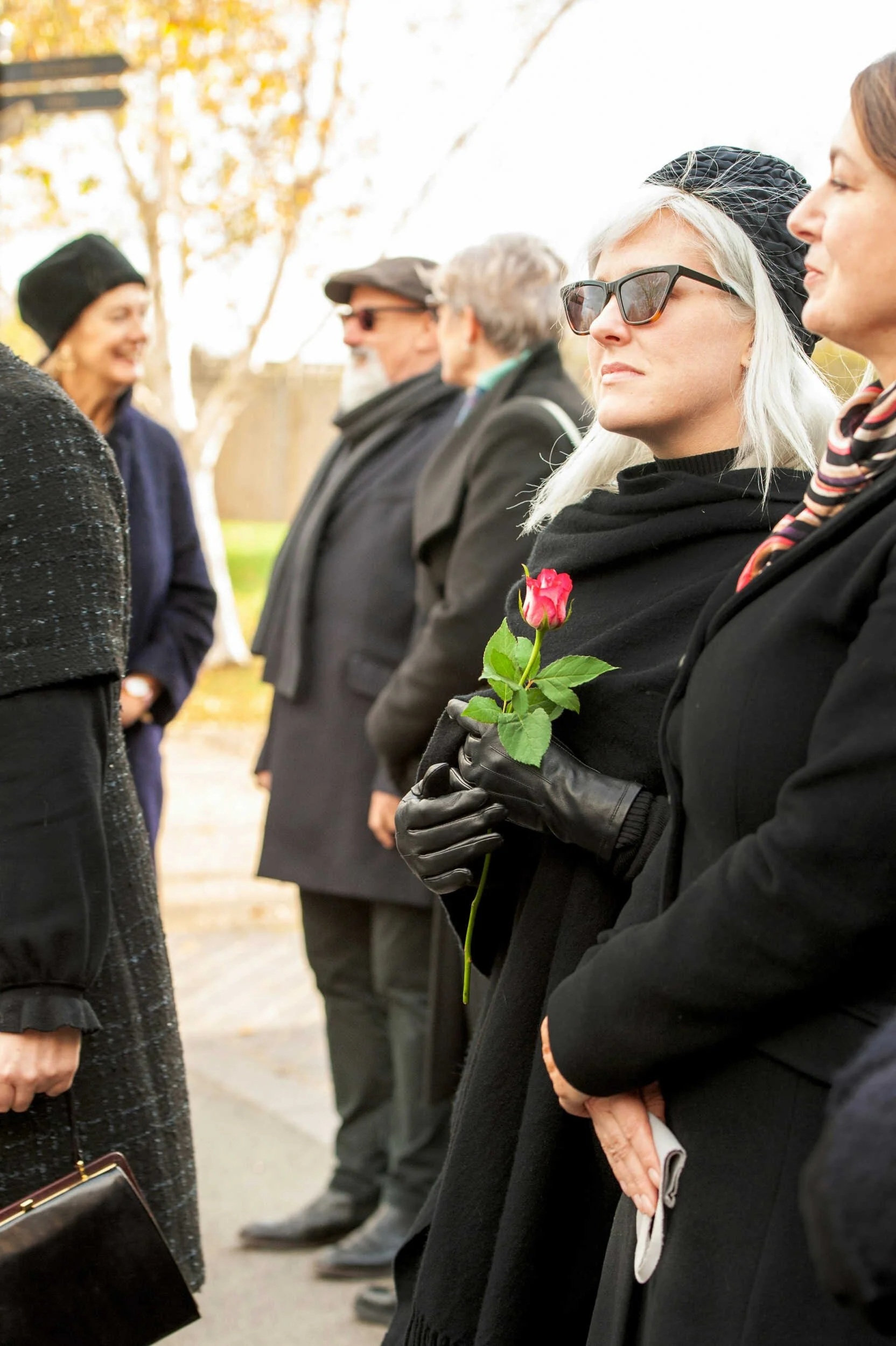
A few years back, one of my high school teachers passed away. He wasn't famous. He wasn't a CEO or a public figure. He was a teacher.
So many people showed up to his memorial that they had to move it to the football stadium. People flew in from across the country. Former students who hadn't been in a classroom in 20 years made the trip because this guy had changed their lives.
I sat there watching all of it, and a thought hit me that I haven't been able to shake since: Would people do that for me?
Not the polite version where a few people show up and say nice things. I mean, would people rearrange their lives to be there? Would they fly across the country? Would they stand up and say something real about what I meant to them?
That question has become a kind of north star for me. And if you're being honest with yourself, I think it's worth sitting with for a minute. Because it cuts through all the noise. The job titles, the LinkedIn updates, the resume bullet points. None of that matters at the end. What matters is who you were to the people around you, and whether the life you built actually reflected who you wanted to become.
An Exercise That Stopped Me in My Tracks
I recently came across something from Stanford's Life Design Lab that connected to this feeling in a way I wasn't expecting. Bill Burnett, one of the founders, shared that his men's group of 32 years started doing what they call "living eulogies." One member announces "I'm going to die next week," and the rest of the group writes and reads their eulogy while the person is alive to hear it.
Think about that for a second. You get to hear what the people closest to you would actually say about your life. Not after you're gone. Right now.
His co-founder Dave Evans took it even further. His group writes the eulogy they hope will be true by the time they die, and they intentionally include things that aren't true yet. The goal is to live aspirationally into that future version of yourself.
As a life and career coach in Phoenix, I work with people every week who are successful on paper but feel a gap between the life they've built and the life they actually want. And I'll be honest: when I heard about this exercise, something clicked. This is one of the most clarifying tools I've encountered. Not because it's clever. Because it's real. It forces you to confront the question that most of us spend our entire careers avoiding.
Why This Works When Other Exercises Don't
Look, I've done a lot of goal-setting exercises over the years. Vision boards, SMART goals, five-year plans. You name it. Most of them start with the wrong question. They ask "What do you want to achieve?" which keeps you in transaction mode. Titles, income, milestones, things to check off a list.
The living eulogy flips the lens entirely. It asks: Who do you want to become? And what would the people who love you most say about whether you got there?
That distinction matters. A lot of the clients I coach in Scottsdale and Phoenix have already achieved plenty. They've hit their numbers. Earned the promotions. Built the resume. And yet they feel this persistent gap between where they are and where they want to be. I call it the "nothing is wrong but nothing feels right" zone. You know the feeling. You should be grateful. You have a good job. But there's this nagging sensation that you're not doing what you're supposed to be doing with your life.
The eulogy exercise exposes that gap in a way that no quarterly goal ever could. Because it's not asking what you want to accomplish. It's asking who you want to be remembered as. And those are very different questions.
Evans put it this way: "The human being is a becoming." You're not a finished product. You're someone in the process of becoming. The question is whether you're becoming intentionally or by default.
Right?

What Nobody's Eulogy Ever Says
I want to sit with this for a second, because it's the thing that makes this exercise hit so hard for the high-performers I work with.
Nobody's eulogy says:
"He was great at responding to emails quickly."
"She always hit her quarterly targets."
"His LinkedIn profile was really impressive."
"She had the best PowerPoints in the department."
Nobody says that. Ever.
They say things like: He made everyone around him feel like they mattered. She had this way of being fully present when you talked to her. He never stopped growing, even when it would've been easier to coast. She gave herself permission to change, and it inspired the rest of us to do the same.
The gap between those two lists is where the real work of your life is hiding. And I don't mean "work" like another project to manage. I mean the deep, meaningful, sometimes uncomfortable work of figuring out who you actually are and living accordingly.
I think about this a lot. Probably more than most people. I've read the books about people in hospice reflecting on their biggest regrets. The things they wish they'd done differently. And I'll tell you, the regrets are never about not working more hours or not hitting one more revenue target. They're about relationships they didn't prioritize. Risks they didn't take. The version of themselves they never became because they were too busy being the version everyone else expected.
Our existence on this planet is like a speck of dust. That's not depressing. It's clarifying. It means we don't have time to waste living someone else's version of our life.

How to Do the Living Eulogy Exercise
You can do this alone, with your spouse, with a close friend, or in a small group. Here's the process. It's not complicated, but it will make you feel something. That's the point.
Step 1: Pick Your Number
How old do you think you'll live to be? Don't overthink it. Based on your family history, your health, your gut feel. Pick an age. Write it down.
This isn't morbid. It's math. If you're 45 and you think you'll live to 85, you've got 40 years of runway. That's a lot of time. Enough time to become two or three different versions of yourself if you're intentional about it. If you're 55 with 30 years left, that's still an enormous amount of space to build something meaningful.
The number makes it real. And I'm a numbers guy, so trust me on this one.
Step 2: Write the Eulogy You Hope Will Be True
Imagine someone who knows you deeply. Your spouse, your best friend, your kid. Picture them standing up at your memorial. What do you want them to say?
Write it in their voice. Not what's true today. What you hope will be true by the time you reach that age you just picked.
This is the critical part: include things that aren't true yet. Aspirations you haven't started. Relationships you haven't repaired or deepened. Versions of yourself you haven't grown into. Write them in as if they've already happened.
I'll be honest, when I first did this, it was uncomfortable. I had to sit there and admit that some of the things I want to be known for aren't things I'm actually living right now. That gap between who I am today and who I want to become? That's the whole point. That's where the work is.
Step 3: Identify the Gaps
Read what you wrote. Circle the things that are already true. The parts of your life that are already aligned with who you want to become. Then underline the things that aren't true yet.
Those underlined items? That's your roadmap. Not a to-do list. A becoming list. I believe in the Japanese concept of Kaizen, continuous improvement, getting 1% better every day. This exercise gives you the direction. The daily 1% gets you there.
Step 4: Create Your Focus Question
Evans uses what he calls a "focus question." A single question that captures what you're trying to become in this season of your life. His is: "How do I live deeply into get to, not got to?"
Yours might be:
"How do I become someone who prioritizes presence over productivity?"
"What would it look like to lead with generosity instead of fear?"
"How do I build a life where my work and my values aren't in conflict?"
Write it down. Put it somewhere you'll see it every day. On your bathroom mirror, on a sticky note on your monitor, on the lock screen of your phone. Wherever it'll catch you when you need it.

Do the Math (It's More Encouraging Than You Think)
One more thing from the Stanford team that I want to leave you with, because it genuinely shifted how I think about this.
They've found that the average person, given the chance, would want to live seven or eight completely different lives. You're currently living one of them. Which means you're experiencing about 14% of your full potential at any given time.
That's not depressing. It's liberating. It means there are six or seven other versions of you still waiting. And the eulogy exercise is one of the best ways I know to figure out which version you want to step into next.
If you're 45 with 40 years of runway, that's enough time to live two or three more of those lives. The only question is whether you start designing them now or keep running the same 14% on autopilot.
At the end of the day, no one is going to save you. You have to be the orchestrator of your own life. But the first step isn't some massive overhaul. It's not quitting your job tomorrow or moving across the country. Sometimes it's just sitting down with a piece of paper and asking yourself: what do I want them to say about me when I'm gone?
That's it. That's the starting point. And from there, you just start putting one foot in front of the other.

Ready to Transform Your Life? Start With a Free Consultation
The most successful people don't wait for perfect conditions—they take action when they recognize an opportunity. If you've read this far, you're already considering whether coaching might be the catalyst you need to reach your next level of success and fulfillment.
Take the first step today by scheduling a free 60-minute consultation call with coach Jeff.
This is a no obligation call to see if coaching is right for you! Your future self will thank you for taking this crucial step today.
Frequently Asked Questions
What does a life coach actually do?
A life coach helps you get clarity on what you want, identify what's holding you back, and build a plan to move forward. Unlike therapy, which often focuses on processing the past, coaching is focused on the present and future. I help my clients figure out what's actually aligned with their strengths, values, and goals, and then we take action together. It's structured, it's practical, and it's built around results.
How is career coaching different from therapy?
Therapy is typically focused on healing, processing past experiences, and working through clinical mental health concerns. Career coaching is forward-looking. We spend maybe 10 to 20% of our time reflecting on what got you here, and the rest is focused on where you're going and how to get there. I'm not a therapist, and I'm upfront about that. If a client needs clinical support, I'll refer them to the right person. I know my lane.
Is life coaching worth the investment?
That depends on how long you're willing to stay stuck. Most of my clients come to me after months or years of feeling unfulfilled, knowing something needs to change but not knowing where to start. A good coach compresses the timeline. Instead of spinning for another year, you get clarity and momentum in weeks. The people I work with consistently say the investment paid for itself in confidence, direction, and career moves they wouldn't have made on their own.
What should I look for in a career coach in Phoenix?
Look for someone who's actually worked in the corporate world, not just studied it. You want a coach who's been in the arena: hired people, managed teams, navigated layoffs, made career pivots themselves. Ask about their real-world experience, not just their certifications. And make sure their coaching style fits you. Some coaches are very passive. I'm hands-on, direct, and action-oriented. That works for some people and not others. A good discovery call will tell you quickly whether it's the right fit.
Do you work with clients outside of Phoenix and Scottsdale?
Yes. While I'm based in Phoenix and serve a lot of clients across Scottsdale, Paradise Valley, and the greater Phoenix metro, all of my coaching sessions are conducted virtually. I work with clients across the country. The tools, frameworks, and approach are the same whether you're in Arizona or anywhere else.
How do I know if I need a career coach or just need to figure it out on my own?
You can absolutely figure things out on your own. Most of my clients are smart, capable people who could eventually get there solo. The question is how long it takes and how much time you spend going in circles. A coach gives you structure, accountability, and an outside perspective you can't get from inside your own head. I hired a career coach myself when I was stuck, and it changed the trajectory of my career. Sometimes you need someone outside your circle to name what's right in front of you.

I’m Jeff Rothenberg, a personal growth and career coach helping people turn uncertainty into confidence and clarity. Whether you’re rebuilding after change, exploring your next career move, or simply ready to grow, I’ll help you create momentum that lasts.
